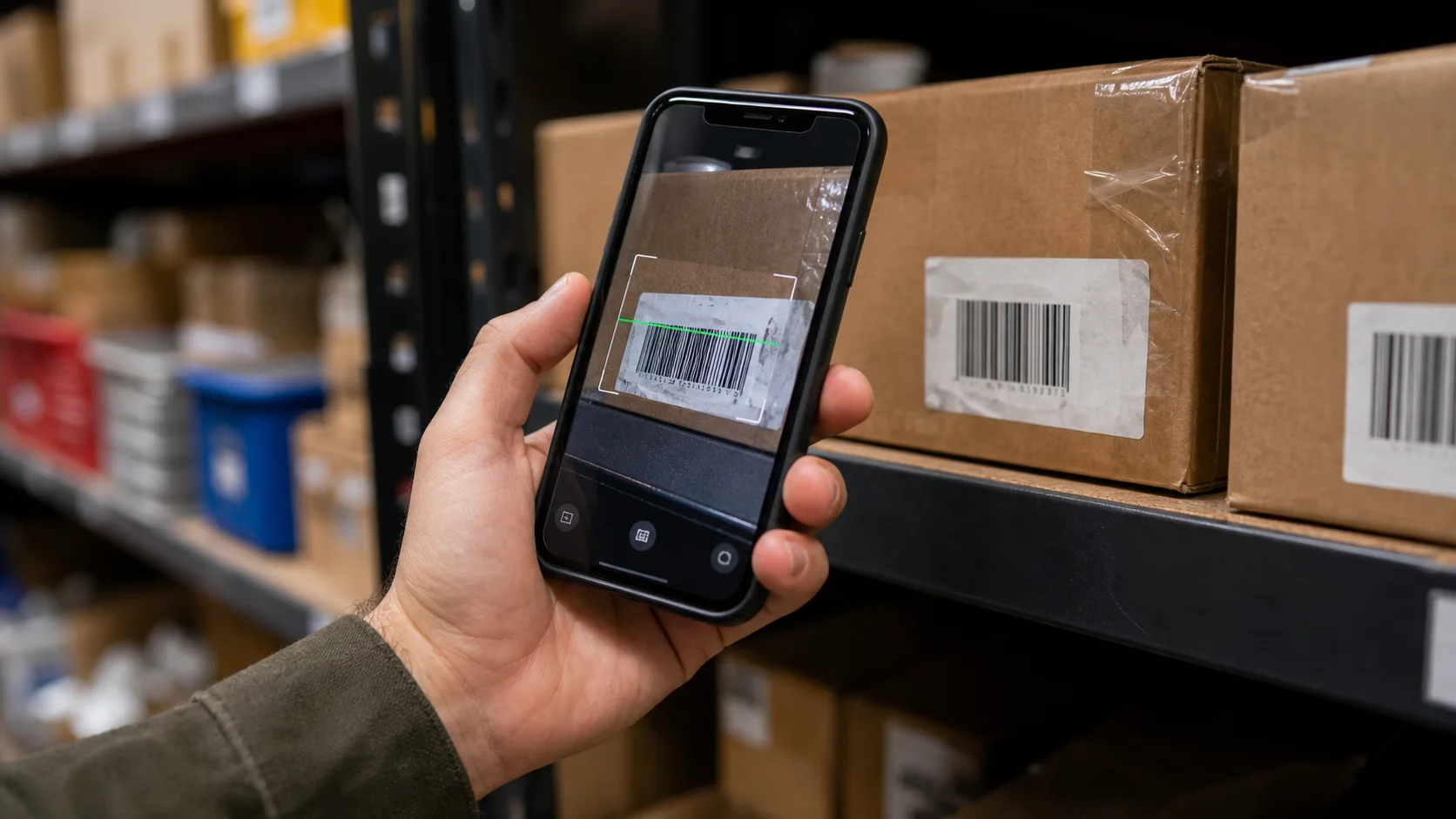
What if counting 200 boxes on a pallet took 3 seconds instead of 10 minutes? That is the promise behind AI-powered image recognition applied to inventory. You point a camera, snap a photo, and a model trained on millions of objects returns a count with a visual overlay showing exactly what it detected.
It sounds futuristic, but the technology is already running in warehouses, retail stores, and construction yards. The gap between manual counting performance and AI-assisted counting is wider than most operations teams expect.
The computer vision inventory tracking market is growing at roughly 18% CAGR and is projected to reach $14 to $16 billion by 2033, driven by e-commerce demand and advances in deep learning.
The real cost of counting by hand
Manual counting has been the warehouse default for decades, and its weaknesses are well documented. A human counter working at normal speed is roughly 91% accurate, meaning about one miscount per 10 items. Add data entry into a spreadsheet and the error rate climbs by another 1 to 3 percent.
Beyond errors, the time cost is punishing. A full warehouse count can take 16 to 20 hours and usually requires shutting down operations for an entire day. Even partial cycle counts consume 5 to 10 hours per week in staff time, costing roughly $500 to $1,000 per month per location in labor alone. For a small or mid-sized business, that is real money going toward a task everyone dreads.
If you are still relying on full annual counts, our cycle counting guide covers how to shift to a less painful cadence. But even cycle counts have a ceiling when every unit is counted by hand.
How image recognition counts stock
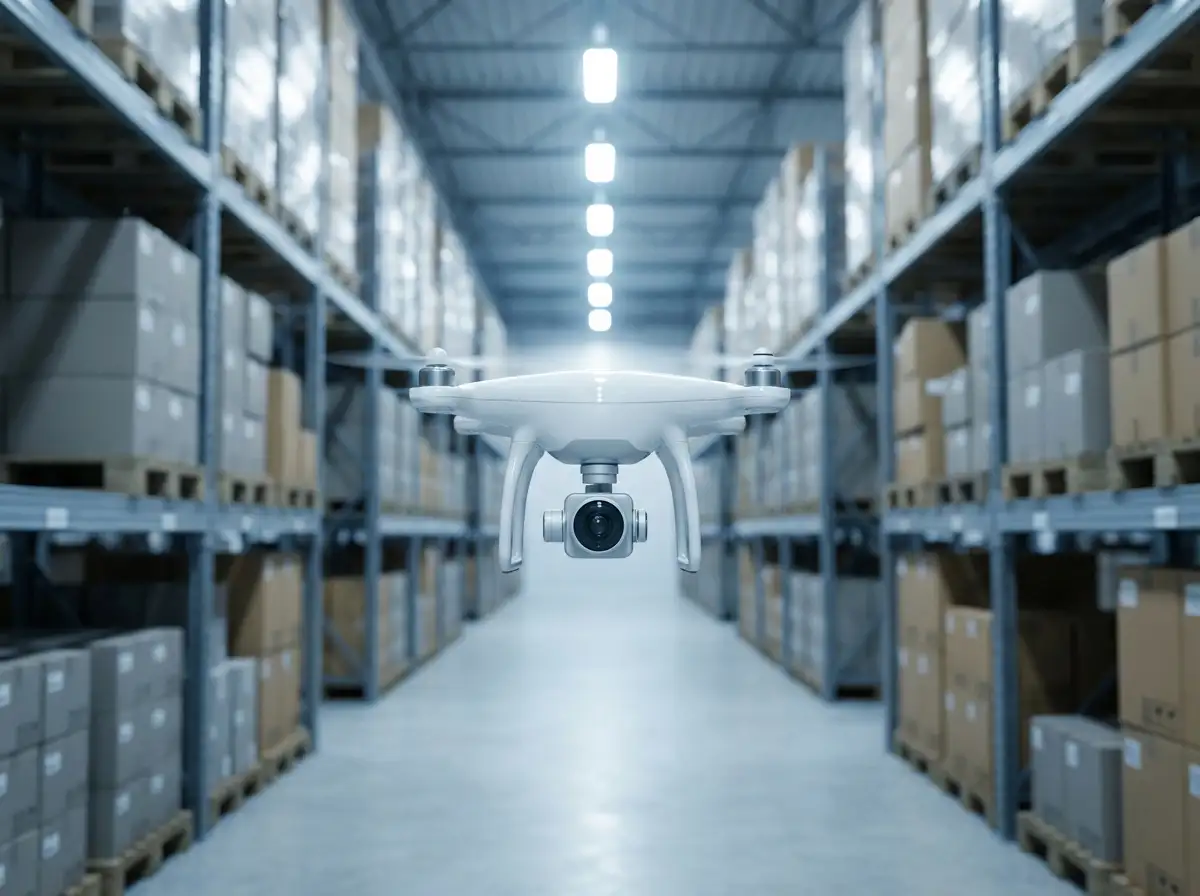
At a high level, the process is straightforward. A camera, whether a smartphone, a fixed shelf camera, or a drone, captures an image of the items. A deep learning model analyzes the photo, detects each individual object, and returns a total count along with a visual overlay marking every item it found.
Most modern systems use object detection architectures like YOLO (You Only Look Once), which can identify and locate objects in a single pass through the image. A 2026 study published in Springer's Multimedia Tools and Applications showed that a fine-tuned YOLOv11 model achieved 97% counting accuracy in warehouse conditions, including challenging scenarios like low-resolution CCTV footage and hard-to-distinguish white fabric rolls.
The advantage is not just speed. It is verifiability. A photo-based count produces evidence: you can see what the model detected, check its work, and compare results over time. A manual count produces a number on a clipboard. Our article on how machine learning transformed barcode scanning covered a similar shift: moving from hardware-dependent processes to software intelligence that improves with every update.

Where teams are using it today
Vimaan's AI scanning platform captures inventory data in under 20 seconds per location, with customers reporting cycle counts 40 times faster than manual methods and savings of $150,000 to $200,000 per year in reduced labor and avoided mis-shipments (Vimaan).
Southern Glazer's Wine and Spirits deployed over 40 Corvus One drones across nine distribution centers. The drones completed 5,000 flights, identified more than 35,000 verified discrepancies, and freed 60 to 70 labor hours per week per site. The operation shifted from quarterly counts to biweekly cycles (Dronelife, March 2026).
Focal Systems deploys shelf-edge cameras in grocery and retail chains, scanning 200 million products per day at over 95% accuracy and detecting nearly one million out-of-stock events daily. Walmart Canada expanded the system to stores nationwide after successful pilots (Focal Systems).
Pipe manufacturers use AI to count pipe ends on trucks and in bundles, replacing slow manual tallies. Construction sites track lumber, rebar, and stacked materials with object detection models trained on specific shapes (Intelgic; MDPI Buildings, 2024).
What works and what does not
AI counting excels in specific conditions: a single object type, reasonable lighting, and items visible from the camera's angle. A pallet of identical boxes, a shelf of bottles, a rack of pipes, or a row of cartons are ideal targets.
But the technology has clear limits. Occlusion, where items are hidden behind or underneath others, is the biggest challenge. A 2025 study from the University of Adelaide found that current models struggle when objects are partially hidden because the network encodes the occluding surface rather than the target. In practical terms: if 30% of a pallet's boxes are blocked from view, the count will under-report.
Other real-world challenges include mixed piles with multiple object types, dense scenes where items overlap heavily, and varying angles or lighting that break the model's assumptions. When teams cannot verify why a number was produced, they revert to manual checks, and the tool adds friction instead of removing it.
The honest takeaway: AI counting is a powerful spot-check tool and a growing replacement for routine counts in controlled conditions. It is not a universal replacement for every counting scenario, at least not yet.
A free way to try it
If you want to see how image-based counting works before committing to a platform, ZapCount is a free, web-based tool that counts objects from a single photo. Upload an image and the AI detects and counts the most prominent objects in the scene, returning a total with a visual overlay marking each detected item. No setup, no account, results in seconds.
It works best with one object type at a time (boxes, bottles, pipes, pallets) and handles up to about 900 objects per image. Hidden or heavily occluded items may be missed, which is consistent with the limitations of any vision-based system. But for a quick warehouse spot-check or a construction site tally, it is a practical way to test whether image counting fits your workflow.
Start with one photo
You do not need to overhaul your counting process to test this. Take a photo of one pallet, one shelf, or one stack today. Run it through an AI counting tool and compare the result to a manual count. That single test will tell you more about where this technology fits in your operation than any market forecast.
The technology is not perfect, but for the right use cases, it turns a 10-minute task into a 3-second task with a photo receipt. That is worth one test.