
It usually starts with one awkward shipment. A supplier sends a new square barcode. One scanner reads it. Another does not. Checkout still only grabs the product ID, while receiving wants batch and expiry too. Nobody is sure whether the extra data made it into the system. That is what GS1 Sunrise 2027 looks like in real life.
By the end of 2027, industry has set a goal that retail POS systems should be able to read and process a defined set of GS1-compliant 2D barcodes alongside today's linear EAN and UPC symbols. The reason is simple: the old barcode mostly carries a product number. The new 2D versions can carry the GTIN plus batch or lot, expiry date, serial number, and web-linked product information in one symbol. That is powerful, but it also means hardware, software, and labeling habits that were good enough for 1D codes may suddenly show their age.
GS1 Sunrise 2027 is not a cliff-edge replacement of UPC overnight. It is a phased move to 2D, with linear and 2D codes living side by side until checkout systems can handle 2D reliably.
What GS1 Sunrise 2027 actually means
GS1's retail goal is straightforward: by 2027, POS environments should be able to scan and process GS1-compliant 2D barcodes used for retail, not just traditional linear codes. The minimum bar is that scanners can at least pull the GTIN from a valid linear or 2D symbol. More mature setups can also pass richer data from the 2D code to the host system.
That distinction matters. A retailer may technically scan 2D but still ignore expiry, batch, or serial data unless the scanner configuration and downstream software are upgraded. So the real project is not only reading a square code. It is deciding what extra data should flow, where it should be stored, and which workflows should act on it.
A 1D UPC or EAN mostly identifies the item. A 2D barcode can carry identity plus batch, lot, expiry, serial, or a web-ready GS1 Digital Link.
The same barcode can support POS, receiving, recall, markdown, traceability, and consumer information instead of each process needing its own label.
It does not mean every linear barcode disappears in December 2027. It means businesses should be ready to work in a mixed 1D and 2D world.
Why this matters outside checkout
The flashy story is consumer QR codes. The operational story is better. When the barcode can carry expiry or batch data, teams can stop sale of expired stock, isolate recalled lots faster, reduce food waste, and make traceability less manual. GS1's current guidance for retailers moving toward single 2D codes on private label products explicitly calls out stopping sale of expired or recalled items, minimizing food waste, and automating markdowns.
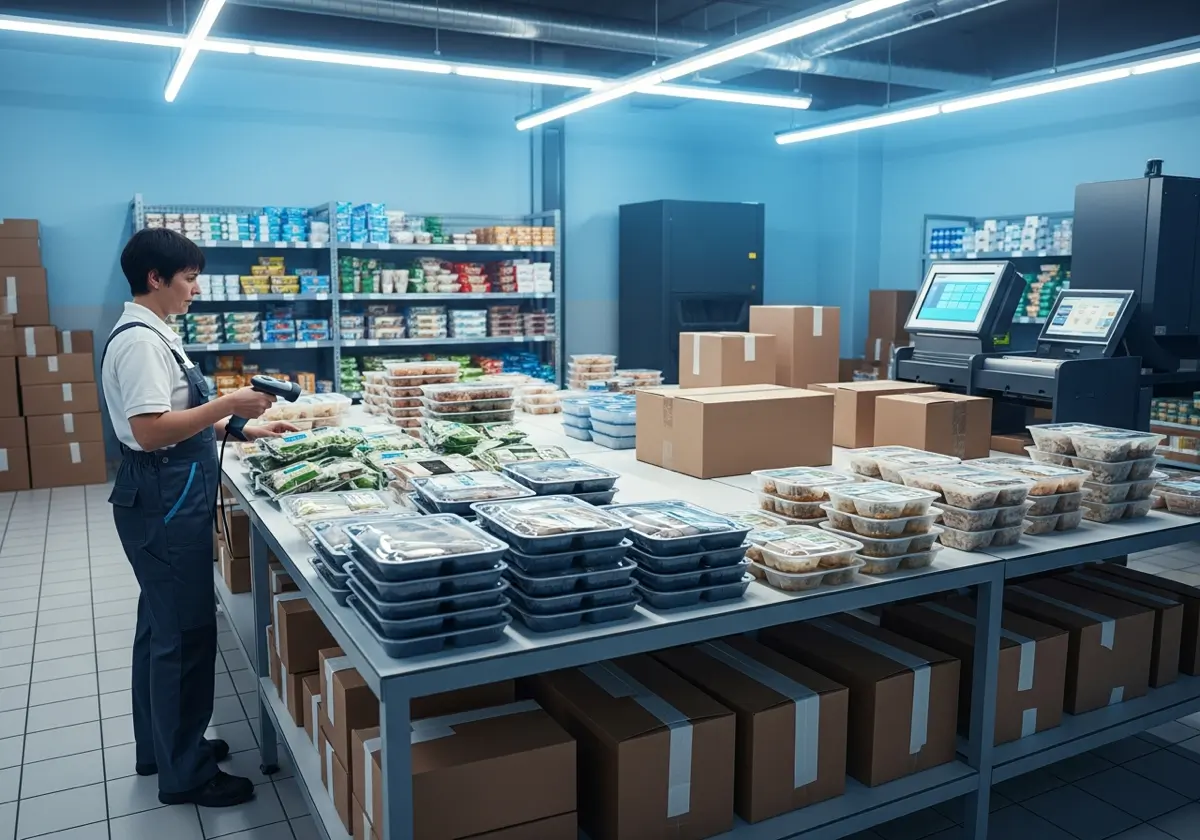
Batch or lot data on the package can turn a broad recall into a precise one. Instead of pulling every similar item, teams can target the affected run.
If expiry data is captured cleanly, FIFO gets easier and POS rules can stop products that should no longer be sold.
Richer on-pack data is also useful for emerging rules. The EU Battery Regulation, for example, requires QR codes on all batteries from 18 February 2027, while battery passports from the same date apply to LMT batteries, EV batteries, and industrial batteries above 2 kWh.
Momentum is already real. GS1 says early 2D work spans more than 45 countries representing about 85 percent of global GDP, and the organization says more than 25 large companies, including Alibaba, Carrefour, L'Oreal, and Procter & Gamble, have backed the move toward next-generation retail barcodes.
What changes in the warehouse first
The first problem is usually not strategy. It is equipment and data handling. Many older laser scanners are excellent at linear codes and blind to 2D. Even when the device can read the symbol, the host system may still only want a plain product ID.
Warehouse impact checklist
- Scan hardware:Check every handheld, fixed scanner, and POS gun. If it relies on a laser engine, assume 1D only until proven otherwise. Camera-based scanners are the starting point for 2D, but QR Code or Data Matrix with GS1 Digital Link may require newer or recently upgraded models. Smartphones are useful pilot devices because they are already camera-based imagers.
- Software parsing:Ask your WMS, ERP, POS, or inventory app what happens when a 2D code contains GTIN plus lot or expiry. Does it keep the extra data, translate GS1 syntax, or throw everything away except the item number?
- Label real estate:Dual-marking means fitting a linear and a 2D code on pack during the transition. Tight packaging, reflective materials, and poor placement become bigger problems, not smaller ones.
- Process rules:If you start capturing batch or expiry, receiving, putaway, cycle counts, and exception handling must know what to do with it. Extra data with no process is just label decoration.
- Staff training:Teams must know which symbol to scan, what the beep means, and what to do when linear and 2D disagree or only one of them reads.
If your labels already struggle today, fix that before you add a second symbol. Our barcode labeling best practices guide covers the quiet zone, placement, and material basics that still matter in a 2D world.
QR Code vs DataMatrix: pick by use case
GS1's retail guidance supports three POS-ready 2D options: GS1 DataMatrix, QR Code with GS1 Digital Link, and Data Matrix with GS1 Digital Link. In practice, most teams can choose by asking two questions: do you need consumer phone compatibility, and how much space do you have on pack?
Best when space is tight and the job is operational, not web-driven. Good for compact labels and use cases that need extra data beyond GTIN without needing the default phone camera to open a web experience.
Best when you want strong consumer-facing behavior. QR is easy for phone cameras, good for linking to product pages or instructions, and still compatible with retail POS migration plans.
Useful when space is limited but you still want a web-capable data structure. The trade-off is weaker default mobile camera compatibility than QR.
A simple rule works well: if the barcode should be friendly to normal smartphone cameras and consumer experiences, favor QR. If the label is tiny or the use case is mostly operational or regulated, DataMatrix is usually the better fit.
The transition will be gradual, not clean
A lot of teams hear Sunrise 2027 and picture a hard switch where UPC disappears overnight. That is not how the transition is designed. For years, many products will carry both a linear barcode and a 2D barcode because not every retailer, scanner, and software stack upgrades at the same pace.
That mixed period is where sloppy implementations fail. If the scanner is not configured correctly, you can get double reads, slow checkout, manual keying, or a beautiful new 2D symbol that nobody downstream knows how to use. GS1's retail guideline is explicit here: products using retail 2D barcodes on-pack still need a POS linear barcode until 90 percent of POS scanning solutions can use GS1-compliant POS 2D barcodes and at minimum capture the GTIN.
Treat dual-marking as a transition control, not as wasted ink. It is the buffer that lets brands, retailers, and warehouse teams learn without breaking live operations.
Why smartphones have an immediate advantage
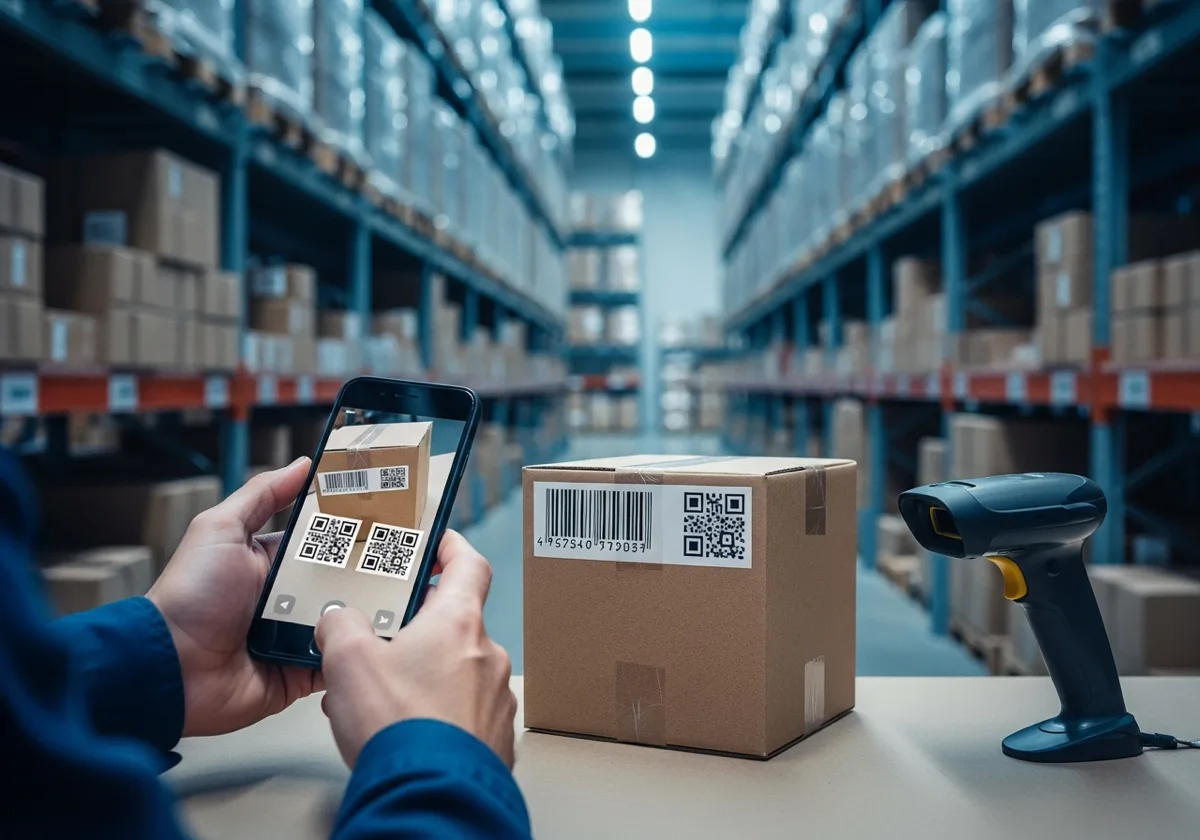
This is one reason smartphone-based inventory tools are well positioned for the shift. A modern phone camera is already a 2D imager. If the scanning software is good, the hardware step is often easier than replacing a fleet of aging dedicated laser devices.
That does not solve everything. Your system still needs to accept the right data, and your labels still need to scan well. But if you want a fast pilot, phones are often the shortest path. See how machine learning improved barcode scanning if you want the technical reason modern mobile scanning works so well.
A 90-day preparation plan
Start before 2027
- Week 1 - audit your scanners:Build a list of every device model and location. Mark each one as laser, imager, or smartphone, and note whether it is used at POS, receiving, picking, or counts.
- Week 2 - check your software path:Ask vendors what happens to GS1 Application Identifier data, GS1 DataMatrix, and GS1 Digital Link inputs. "We can scan QR codes" is not a complete answer.
- Week 3 - choose one pilot use case:Start with one clear win, such as expiry capture on receiving, batch traceability for a high-risk item, or a private-label product that needs both POS and consumer info.
- Week 4 - test dual-marked labels:Put linear and 2D on the same item, then test receiving, putaway, cycle count, and checkout behavior end to end.
- Month 2 - train the floor:Teach teams which symbol to use, what additional data matters, and what exception path to follow when a scan fails.
- Month 3 - decide your default policy:Document when you will use QR, when you will use DataMatrix, what minimum data must be encoded, and which systems own lot, expiry, serial, or web content.
Final takeaway
GS1 Sunrise 2027 is the biggest barcode update in a generation, but it is not really a barcode story. It is a data and process story. The teams that win will not be the ones with the prettiest new square codes. They will be the ones that audit hardware early, decide what data they care about, and pilot 2D in one controlled lane before they scale it.
Next step: pick 10 high-volume or high-risk SKUs and run a live scan test this month. If your devices, labels, and software can survive that small pilot, the 2027 deadline stops feeling abstract.